Celebrating 1 Year Of Implementation In Togo

Celebrating 1 Year Of Implementation In Togo


In May 2022, in a significant stride towards combating malaria and improving child healthcare, the implementation of Preventive Malaria Chemotherapy (PMC) within the MULTIPLY project district started in Togo.

The project’s initial focus lies on the Haho district, nestled within Togo’s Plateaux region. This strategic decision was guided by a meticulous analysis of key factors such as geographical location, birth statistics, vaccination coverage, and malaria prevalence. The Haho district emerged as an optimal starting point for PMC implementation in Togo.

From its start, PMC implementation in Togo has had strong endorsement from the local community and authorities. The journey has included addressing crucial aspects like the availability of clean water for PMC dose administration and essential transportation equipment for outreach efforts. One of the project’s remarkable achievements has been the comprehensive deployment of PMC across all health facilities within the district. Through perseverance and innovative problem-solving, the project has managed to overcome initial obstacles, achieving its goal of accessibility and coverage.

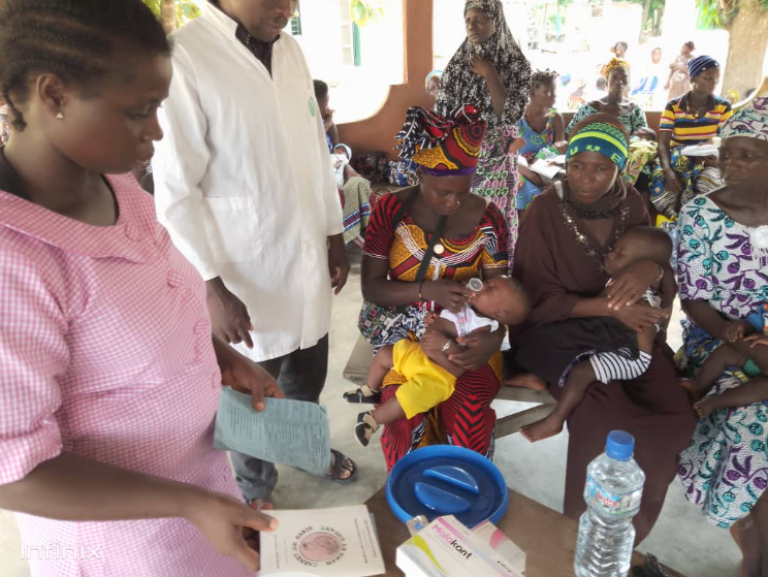
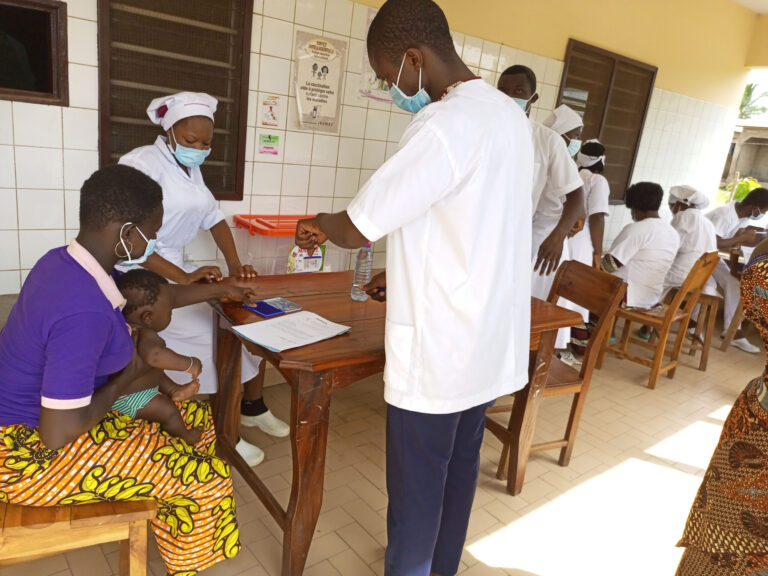
Within the majority of 27 health centers, chosen as sites for MULTIPLY implementation, , a novel approach known as Directly Observed Treatment, Short-Course (DOTS) has been adopted to ensure efficient PMC administration to children. Health professionals prepare the PMC doses while mothers take charge of the administration process under the watchful supervision of healthcare personnel. As of June 30, 2023, a total of 46,663 PMC doses have been successfully administered.

Safety has been paramount throughout the implementation process. Rigorous pharmacovigilance measures were introduced in tandem with the PMC intervention. Encouragingly, after a year of implementation, no adverse effects have been reported, underscoring the careful planning and execution of the initiative.

The health district’s dedicated teams have integrated PMC implementation into their daily routines. Supervision activities for PMC align with ongoing vaccination efforts and other interventions within the district. As PMC implementation advances into its second year, the motivation of district-level teams remains, cementing PMC administration as a routine practice in Haho district’s health centers.

In summary, the journey of PMC implementation in Togo’s MULTIPLY project serves as an example of progress and dedication. Through community support, strategic decision-making, and collaborative problem-solving, PMC is poised to make a lasting impact on child healthcare and malaria prevention in the region. As the initiative continues to unfold, the prospect of healthier futures for the children of Togo shines brighter than ever before.

World Malaria Day In Sierra Leone And Mozambique

World Malaria Day In Sierra Leone And Mozambique


The 25th of April every year is an internationally recognized day for the commemoration of the global effort to control malaria and celebrating the gains that have been made and the remaining challenges ahead. Since 2000, even though the world has made historic progress against malaria, saving already millions of lives, the world is not on track to reach 2 critical targets of the WHO Global technical strategy for malaria 2016-2030: Reducing global malaria case incidence by 90% or more and reducing the global malaria mortality rate by 90% or more by 2030.

According to the world malaria report from 2022, malaria claimed the lives of an estimated 619,000 people in 2021 compared to 625,000 in 2020. There were 247 million new cases of malaria in 2021 compared to 245 million in 2020 with the African continent accounting for 95% (234 million) cases and 96% (593,000) of deaths. Nearly 80% of the malaria deaths in the African continent were among children under the age of five.

This year in Sierra Leone, to commemorate World Malaria day, the Ministry of Health and Sanitation partners with the participation of key stakeholders contributing to the fight against malaria in each district across the country, took the opportunity to reflect on the successes over the years, highlighted the challenges and garnered momentum. Statements from the health authorities in the districts acknowledged the contribution made by various partners including MULTIPLY over the last year in the fight against malaria and appealed for the expansion of the 6-dose strategy without further delay. Short statements were delivered on behalf of the project mainly focussed on the activities and goals of the projects by Dr Augustin Fombah, Mr. Kwabena Owusu, Dr Tonya Musa and Mr. Lansana Conteh. As part of the advocacy plan, the benefits of the projects, the challenges and the expected role of communities were also presented.

Additionally, live radio panel discussions were held in key radio stations in the three districts, Bombali, Tonkolili and Port Loko, where the project team, comprising Dr. Augustin Fombah, MULTIPLY Coordinator; Dr Tonya Musa from the University of Sierra Leone (media and communication expert) moderated the radio discussions; Mr. Abubakarr Jalloh, the Assistant Social Scientist and Mr Lansana Conteh (Communication Officer from COMAHS) teamed up with the Malaria Focal Person and Social Mobilization Officer of each district (Mr Mohamed Rashid Kargbo and Mohamed Conteh for Bombali, Mr Hassan Bellal Conteh and Mr. Erwin Kamara for Port Loko, Mr James Fornah and Mr. Mohamed Jalloh for Tonkolili respectively) to raise awareness on the importance and impact of malaria in general, the malaria intervention activities being implemented in the districts, MULTIPLY activities, and the role of the community, community leaders and the way forward.

In Mozambique, MULTIPLY project was officially launched during the 2023 World Malaria Day celebrations as part of the provincial ceremonies in Inhambane province.On behalf of CISM, Fabião Luís highlighted the importance of the MULTIPLY project in improving child survival by decreasing malaria and anemia burden, as well as vaccine preventable diseases.

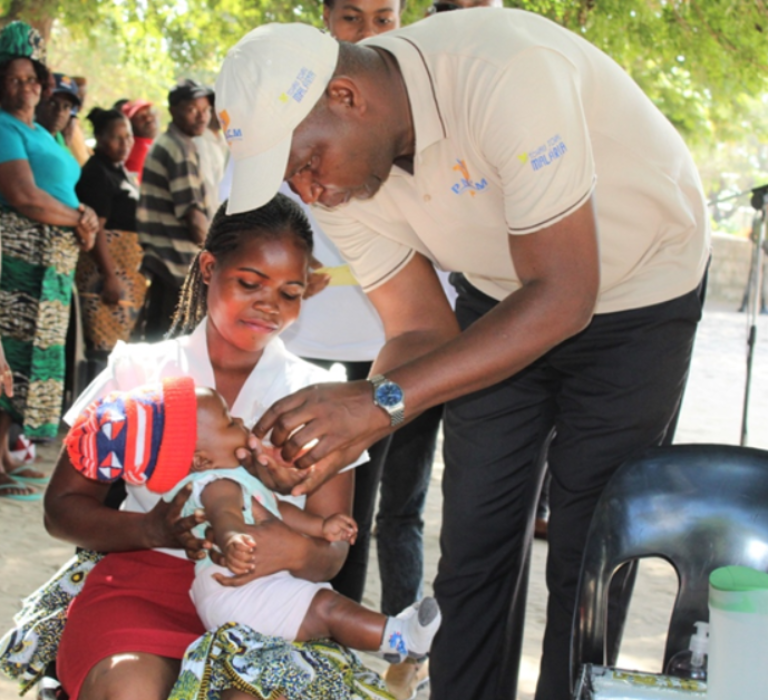
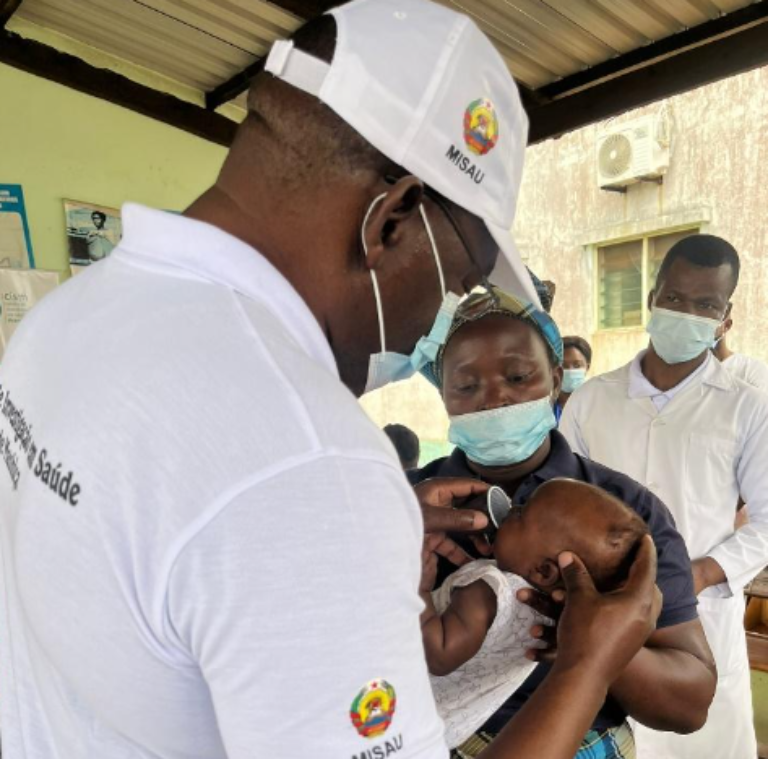
His Excellency, Daniel Chapo, provincial Governor administering a first official PMC dose to a child

Multiply Annual Meeting – Sierra Leone 2023

Multiply Annual Meeting – Sierra Leone 2023


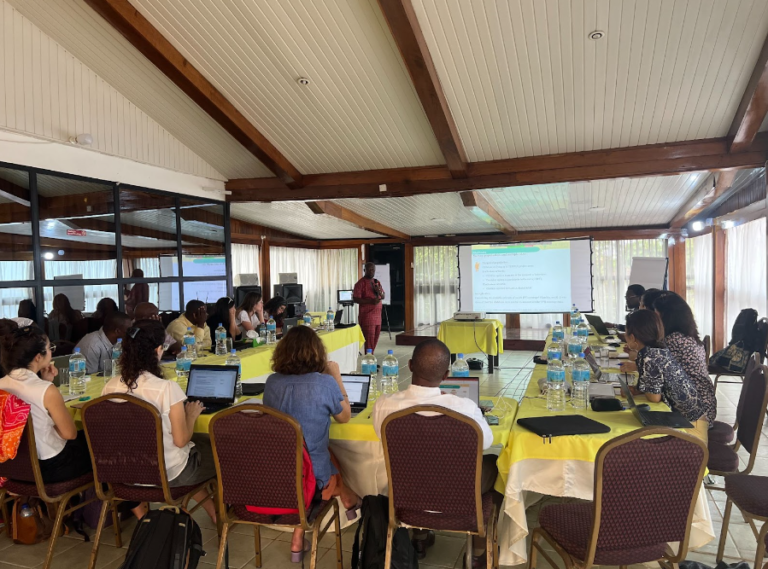
For the first time since the start of the MULTIPLY project, members of the consortium were able to meet in person at the project’s annual investigators’ meeting held from March 21st to 24th in Sierra Leone. The meeting brought together members of the consortium to discuss progress made towards achieving the consortium’s objectives and to plan for the upcoming years.

On the morning of March 21st, more than 100 participants representing the main health stakeholders of Sierra Leone attended the opening ceremony of the Annual Investigator’s meeting. During the ceremony representatives from WHO and UNICEF gave short statements together with Montserrat Blazquez (EDCTP), Professor Foday Sahr (Vice Chancellor – University of Sierra Leone), Dr. Sartie Kanneh (Chief Medical Officer), Dr. Austin Demby (Ministry of Health) and Professor Alpha T. Wurie from the Ministry of Technical and Higher education. During this opening ceremony, the MULTIPLY project, at a glance, was presented by Professor Mohamed Samai, Sierra Leone’s Principal Investigator, and Dr. Clara Menendez, the Project Director.

The Investigator’s Meeting started after lunch, its main objective being to update all consortium partners on the status of the project in each of the Work Packages and discuss challenges and exchange on lessons learned across the three countries. The meeting was an opportunity for the consortium members to share their experiences, successes, and lessons learned since the project’s inception.

After a day and a half of the investigator’s Meeting in Freetown, the attending MULTIPLY consortium members visited some of the project’s health facilities in Port Loko and Bombali districts. MULTIPLY members had the chance to witness the delivery of IPTi during outreach and fixed EPI sessions and benefited from Sierra Leone’s experience in IPTi delivery since 2017. The visits to local health facilities provided valuable insights into the areas where more strengthening would be needed and the positive impact of the project including first hand accounts from the healthcare workers.

Overall, the annual meeting was a significant event for MULTIPLY and its members as it marked the first time that all members were able to come together in person. The discussions held and decisions made will guide the consortium’s activities for the upcoming year as it continues to work towards achieving its objectives.

Implementation of Perennial Malaria Chemoprevention (PMC) within the MULTIPLY project started in Mozambique – 2 December 2022

Implementation of Perennial Malaria Chemoprevention (PMC) within the MULTIPLY project started in Mozambique – 2 December 2022


Dr Carlos Estevao administering the first SP dose to the first child at Massinga- Sede Health Centre

The implementation of PMC under the MULTIPLY project started in Massinga (Inhambane province) on the 2nd of December 2022. The first child to receive the first of the 6 doses of PMC was registered at the Massinga Sede Health Facility. Scale-up of implementation to the rest of the 14 health facilities in the province ended on the 13th of December.

The Medical Director of the Massinga Health District, Dr Carlos Estevao, the district malaria focal point, the health care personnel of the Massinga Sede Health Facility, the MULTIPLY technical coordinator and MULTIPLY team members from CISM and ISGlobal were present for the occasion. Mothers and caretakers present at the health facility were addressed by Dr Estevao who highlighted the importance of PMC and encouraged the parents to adhere to it.

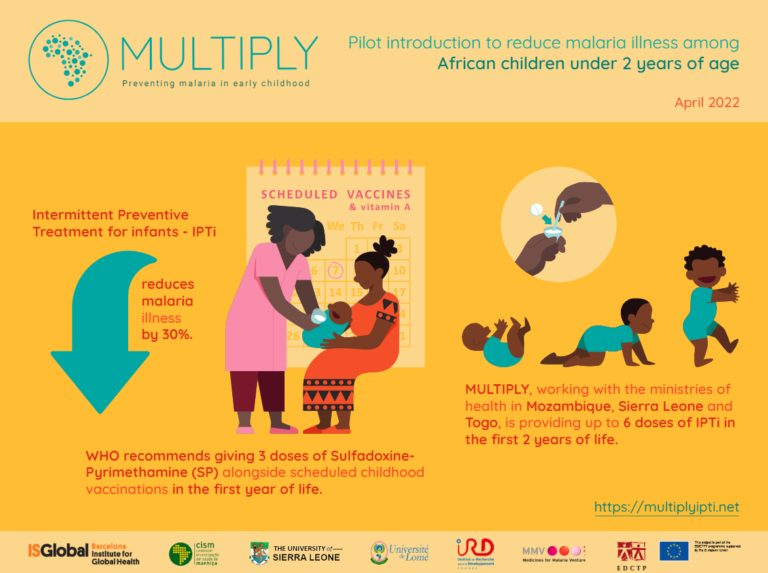
MULTIPLY delivers PMC through the Healthily Child Consultation Programme (CCS) which is linked to the Expanded Program on Immunization (EPI) by the calendar for a child’s visit at the health facility. The CCS has been identified by NMCP and its partners as the only feasible, sustainable, and cost-effective strategy to reach this high-risk group in the Mozambican context. PMC is a full therapeutic course of antimalarial medicine (with sulfadoxine-pyrimethamine (SP) delivered to infants in the context of routine immunization services during the first two years of life. MULTIPLY is the pilot implementation of PMC in selected districts in Mozambique, Sierra Leone, and Togo to maximize the delivery and uptake of PMC, to achieve the full potential of this intervention. Working with the ministries of health in Mozambique, Sierra Leone, and Togo, MULTIPLY will give up to 6 doses of PMC in the first two years of life. PMC will be given at health facilities and EPI mobile outreach clinics using a paediatric dispersible formulation of SP, alongside routine vaccinations and vitamin A supplementation.

Implementation of the Intermittent Preventive Treatment of malaria in infants (IPTi) within the MULTIPLY project has been launched in Togo – 19 May 2022

Implementation of the Intermittent Preventive Treatment of malaria in infants (IPTi) within the MULTIPLY project has been launched in Togo – 19 May 2022


The implementation of IPTi under the MULTIPLY project started in Togo on the 19th of May 2022; IPTi is being piloted in Haho district, of the Plateaux region. The first child to receive IPTi through the MULTIPLY project was registered at the AMAPAKPE health center. Pilot implementation will be rolled out over the next 3 weeks to all 27 health facilities in the district.

The following stakeholders were present for the beginning of IPTi implementation: community members, the Director of the Haho Health District, the focal point for malaria in the district, members of the Haho Health District management team, representatives of the Togo MULTIPLY project team, as well as the manager and health care personnel of the AMAPAKPE health center.

Representatives of the Togo MULTIPLY project team and the District Director gave a final briefing on IPTi implementation and reviewed the mother’s itinerary as soon as she arrives in the health center, with the weighing of the child as the first point of passage.

The head of the AMAPAKPE health center, Mr. DAGNON Kwami, chaired the activity and reaffirmed that the AMAPAKPE health center was ready to start implementing IPTi.

The Director of the Haho Health District, Dr. ATEKPE Payakissim, took the floor to welcome the mothers and explain the project. In collaboration with the members of the coordination team of the MULTIPLY project in Togo, the head of the AMAPAKPE health center proceeded to counsel the women on the importance of vaccinating their children and to follow the vaccination schedule and make sure they bring in their children for vaccination when requested. During the question-and-answer session, one of the women asked if she had to pay anything to receive the SP; the announcement that the SP would be completely free of charge was very well received by the mothers. When asked if the treatment was enough to protect the child from malaria, the mothers were encouraged to continue using long-lasting insecticidal nets (LLINs) provided by the malaria control program as IPTi is part of a package of malaria prevention methods that should be used.

Implementation continued with the first IPTi-eligible child. The child was weighed before administration of the dispersible SP pill in a small amount of clean water by the health facility staff. The child was observed for thirty minutes and the medication was well tolerated. Implementation will continue for 2 years. It is envisioned that the lessons learnt from this pilot implementation will lead to the national scale up of IPTi in the future.

Debriefing session before the launch of the implementation: seated on the chair, Dr. ATEKPE Payakissim, Director of the Haho Health District, on his right wearing a MULTIPLY T-shirt, Dr. SADIO Arnold, local supervisor of the MULTIPLY implementation component and member of the country coordination team.

Administration of IPTi to the first eligible child

Counselling session with mothers/caregivers

MULTIPLY update for World Malaria Day – 25 April 2022

MULTIPLY update for World Malaria Day – 25 April 2022


The MULTIPLY project is conducting the pilot introduction of multiple doses of Intermittent Preventive Treatment of infants (IPTi) to reduce malaria during early childhood. MULTIPLY stands for MULTIple doses of IPTi Proposal: a Lifesaving high Yield intervention and is funded by the European and Developing Countries Clinical Trials Partnership (EDCTP2) to implement up to 6 doses of IPTi in children up to 2 years of age in selected districts of Sierra Leone, Togo and Mozambique. IPTi has been shown in clinical trials to reduce malaria illness by 30%, hospital admissions by 23% and anaemia by 21%. It is also cost-effective as the drug used for IPTi (sulfadoxine-pyrimethamine, SP) is inexpensive and IPTi uses the already existing delivery system, the Expanded Programme on Immunization (EPI). The World Health Organization (WHO) currently recommends that 3 doses of IPTi are given to children in the first year of life alongside childhood vaccinations through the EPI.


To date, only one African country – Sierra Leone – has put IPTi into policy and practice. Concerned with this slow adoption, WHO in 2019 recommended adaptations be urgently tested through pilots assessing impact, operational feasibility and cost effectiveness. MULTIPLY is building on the WHO recommendation to give more doses of in the first year of life and to extend into the second year of life, delivered alongside the EPI. This is possible because there are now additional contacts made by the EPI to give children vitamin A supplementation every 6 months up to 2 years of age, and to give a measles booster vaccination in the second year of life. The exact number of doses given will depend on the EPI schedule of the country. By integrating service, combining IPTi with the EPI, we believe that demand for EPI vaccinations and vitamin A supplementation will increase, and this will be supported through a social and behaviour change communication campaign to increase community involvement and empowerment. MULTIPLY will also deliver IPTi through EPI mobile outreach clinics to access hard to reach children and increase equity.


This pilot introduction is led by the Barcelona Institute for Global Health (ISGlobal) in Spain, in coordination with researchers at:

  • Fundaçao Manhiça, at Centro de Investigação, Mozambique
  • University of Lomé (UL), Togo
  • College of Medicine and Allied Health Sciences (COMAHS), University of Sierra Leone, Sierra Leone
  • Institut de Recherche pour le Développement (IRD), France
  • Medicines for Malaria Venture (MMV), Switzerland


MULTIPLY has made great progress working with the ministry of health in each country to implement multiple doses of IPTi. Implementation in Sierra Leone began February 2022, where up to 6 doses will be given in the first 2 years of life. Togo will start implementation in May 2022, where up to 4 doses of IPTi will be given. It is envisioned that Mozambique will begin implementation in June 2022, where up to 6 doses will be given. Multiple doses of IPTi will be given to up to 45,000 children, 15,000 per country, for 2 years. We are using a paediatric dispersible dose of SP given in a small amount of clean water. In 2024 we will conduct impact and evaluation studies to assess impact, operational feasibility and cost effectiveness of multiple doses of IPTi and discuss the results with the ministries of health, which could lead to the scaling up to other regions of the country with moderate-to-high malaria transmission.

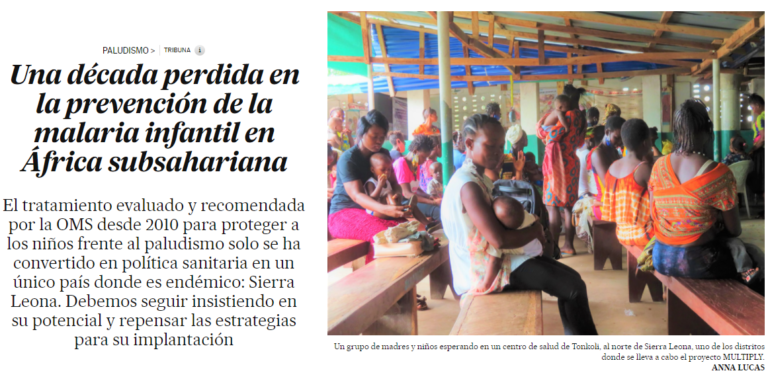
Article about MULTIPLY in El País – 24 December 2021

Article about MULTIPLY in El País – 24 December 2021


Anna Lucas, ICARIA’s project coordinator at the Maternal, Child and Reproductive Health Initiative in ISGlobal published an article about malaria in El País. The article “A lost decade in preventing childhood malaria in sub-Saharan Africa” highlights the relevance of IPTi in the prevention of malaria in infants.

Read the full article here: https://elpais.com/planeta-futuro/red-de-expertos/2021-12-24/una-decada-perdida-en-la-prevencion-de-la-malaria-infantil-en-africa-subsahariana.html

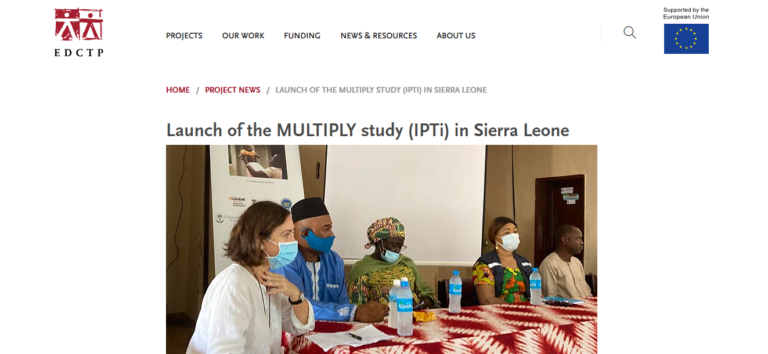
MULTIPLY project launched in Sierra Leone – 19 November 2021

MULTIPLY project launched in Sierra Leone – 19 November 2021


The MULTIPLY project is being conducted in Sierra Leone, Togo and Mozambique. In Sierra Leone, MULTIPLY is led by the College of Medicine and Allied Health Sciences (COMAHS), University of Sierra Leone in close collaboration with the Barcelona Institute for Global Health (ISGlobal) and the Ministry of Health and Sanitation through the National Malarial Control Program (NMCP) and the Child Health / Expanded Programme on Immunization (CH/EPI) in Sierra Leone.


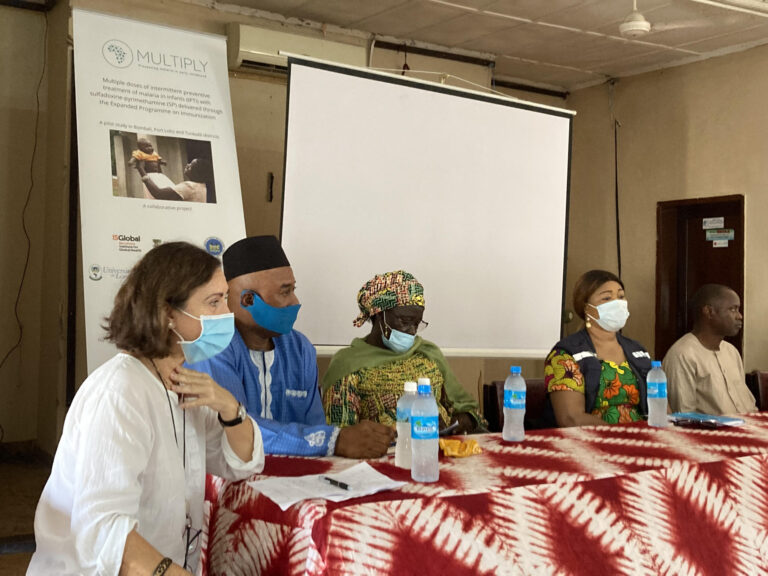
MULTIPLY was formally launched in Sierra Leone on the 19th November 2021 by the Acting Registrar on behalf of the Vice Chancellor, University of Sierra Leone in Makeni, Bombali District. In attendance were the Principal Investigator for MULTIPLY in Sierra Leone, the International Principal Investigator and team from Barcelona, District Medical Officers (DMO) and Medical Superintendents (MS) from Bombali, Port Loko and Tonkolili, Paramount Chiefs, Peripheral Health Units (PHU) in-charges, representatives from the University of Sierra Leone, NMCP, CH/EPI, the World Health Organization (WHO), inter-religious organizations, the military, the police, other key district stakeholders and the press. The objectives of the study were presented by the Principal Investigator followed by statements from different speakers including the International PI and representative from WHO, NMCP, CH/EPI and the DMO.


Currently, Sierra Leone is the only country in sub-Saharan Africa that implements the WHO recommended malaria control policy Intermittent Preventive Treatment of malaria in infants (IPTi). Through MULTIPLY, we seek to expand from the currently recommended 3 doses of IPTi in the first year of life to 6 doses in the first 2 years of life to increase the protective effectiveness of IPTi to this high risk group.


Training for the MULTIPLY Baseline Household Survey in Sierra Leone – 1-8 November 2021

Training for the MULTIPLY Baseline Household Survey in Sierra Leone, 1-8 November 2021

The MULTIPLY project conducted a baseline household survey before the implementation of IPTi through MULTIPLY. The MULTIPLY project aims to increase the uptake of IPTi in infants and increase the protection from malaria by increasing the number of doses given in the first year of life and extending into the second year of life. MULTIPLY will provide research evidence to inform future policy guidelines in moderate-to-high malaria transmission settings.

The household survey was conducted to measure IPTi coverage and malaria prevalence in the project districts. The result will be compared with an endline survey which will be conducted after two years of implementation to understand if the additional doses of IPTi with SP increases protection against malaria and increases the uptake of IPTi.

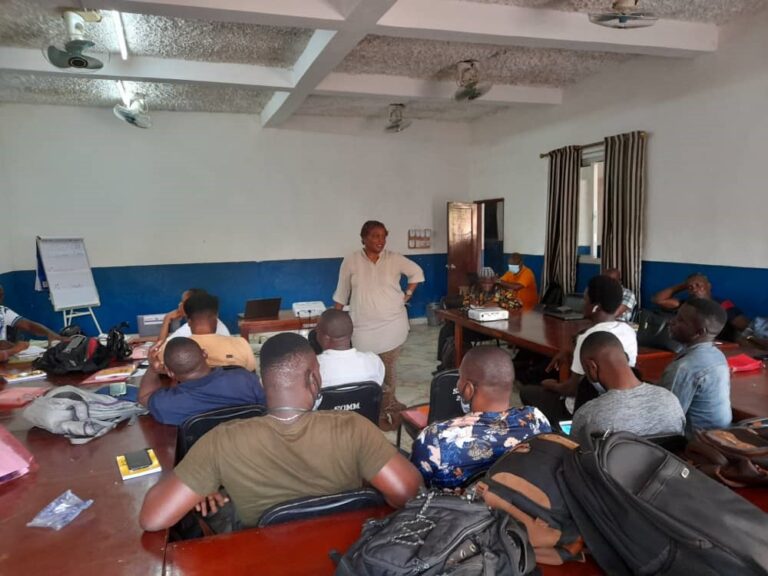
A team of facilitators from the Barcelona Institute for Global Health (ISGlobal) in collaboration with Statistics Sierra Leone (SSL), the Ministry of Health and Sanitation (MOHS) and the College of Medicine and Allied Health Sciences (COMAHS) conducted a 4-day training for the household survey from the 1st-8th November 2021 in Makeni city. The training was co-facilitated by the MULTIPLY and ICARIA project coordinators, Dr. Augustin Fombah and Mr. Kwabena Owusu-Kyei, the data managers and the Principal Statistician from SSL. The trainees included project staff, the SSL and the MOHS.

The training was both theoretical and practical. The theory covered project overview, random sample selection, Good Clinical Practice, mapping techniques. Then enumerators practiced conducting questionnaires with tablets, interviews and exercises; nurses practiced performing malaria Rapid Diagnostic Tests, identifying severe malaria, administering treatment for uncomplicated malaria and referral of severe cases. Each survey team was composed of several enumerators, one nurse and one supervisor. The training was followed by a 2-day pre-test to make sure everything was ready to do the survey in the following weeks.


MULTIPLY Stakeholders Meetings in Sierra Leone – November 2021

The MULTIPLY project was officially launched in Makeni city on the 19th November 2021. It was attended by national and district stakeholders from Bombali, Port Loko and Tonkolili districts, where the project will be implemented. Among the attendees were traditional, administrative and political leaders, as well as other health partners. The local and international principal investigators, Professor Mohamed Samai and Dr. Clara Menéndez, were present to address key questions.

During the project launch, other stakeholders committed to fully support this initiative to improve child health. It was emphasised that continuous stakeholder engagement throughout the project implementation, through media coverage and robust community sensitisation, was essential for community acceptance and participation.

Prior to the project launch, a familiarisation meeting was held with stakeholders, community leaders and partners in each of the three project districts to explain the project. The MULTIPLY coordinator, Dr. Augustin Fombah, presented the project overview. The meetings were held to gain the support of stakeholders and strengthen collaborative efforts among community leaders.